
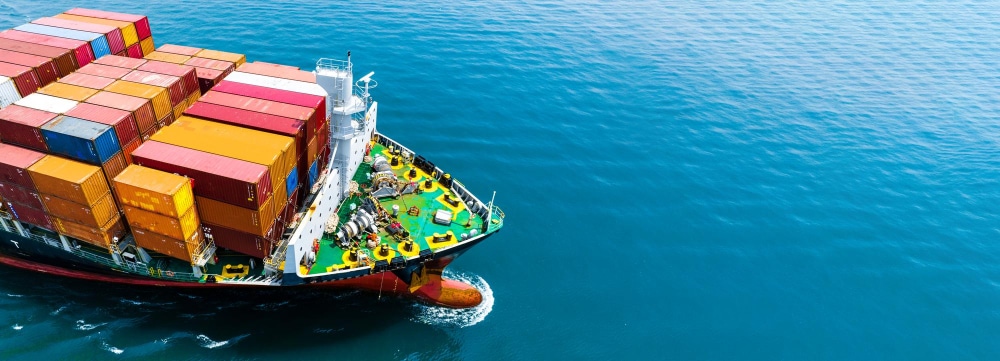
Definition of Sea Freight:
is the process of transporting goods across seas and oceans using ships. It is one of the oldest shipping methods used throughout history, providing an effective way to transport large quantities of goods over long distances. It is primarily used in international trade between countries.
Types :
Container Shipping: This type relies on using standard containers that simplify loading and unloading, making it one of the most efficient sea shipping methods.
Bulk Shipping: Used for transporting raw materials such as grains, minerals, and liquids, which are shipped unpackaged directly in the ship’s tanks.
Heavy or Oversized Cargo Shipping: Dedicated to transporting large goods that cannot fit in containers, such as industrial equipment and turbines.
Car Shipping: Vehicles of various types are transported by specialized ships, where cars are loaded in a way that ensures their safety.
Advantages :
Economic Cost: is one of the most affordable shipping methods, especially for large quantities of goods.
Capacity for Massive Loads: Ships can carry substantial loads compared to other shipping methods, making it ideal for heavy materials.
International Connectivity: Sea freight enhances international trade by linking countries across the oceans.
Disadvantages :
Slowness: Sea freight is slower than other shipping methods, which may be unsuitable for goods needing quick delivery.
Weather Dependency: Ships may face delays or risks due to bad weather conditions.
Environmental Risks: Sea freight can cause marine pollution due to fuel spills or accidents.
Sea freight is an efficient and suitable option for international cargo transport, thanks to its large capacity and economic cost. However, the slow process and weather challenges can present some obstacles.


